Car Games That Are Actually About Driving
Stunt tracks, traffic weaving, arena demolition and open-road cruising are four different games wearing the same badge. Which one you want depends on what you find satisfying.
4 min read
“Car games” is not a genre. It is a vehicle appearing in four genres that want completely different things from you, and picking the wrong one is why people bounce off them.
Sorting them out takes about a minute and saves a lot of wasted clicking.
The four kinds, and who each is for
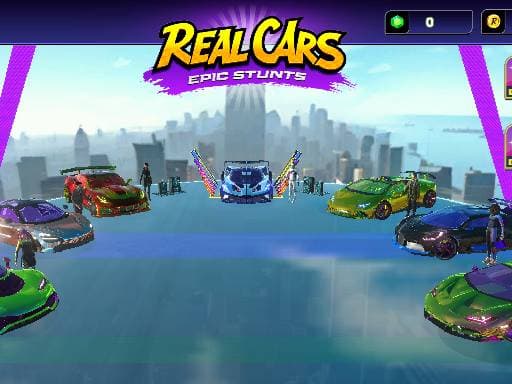
Stunt and physics driving. The road is a set of ramps, loops and impossible geometry, and the goal is to land things. Real Cars: Epic Stunts and Impossible Car Stunt Tracks sit here. The skill is mid-air control — most players never realise you can steer in flight, and it is the entire difference between landing and cartwheeling. For you if you enjoy failing spectacularly.
Traffic weaving. One road, endless oncoming cars, and a score that rewards near misses. Extreme Highway Traffic Racer is the clean example. There is no track to learn and no lap to complete, just an escalating test of nerve — the scoring deliberately pays you for cutting it fine, which is what stops it being a driving-safety simulator. For you if you want something you can start and stop in ninety seconds.
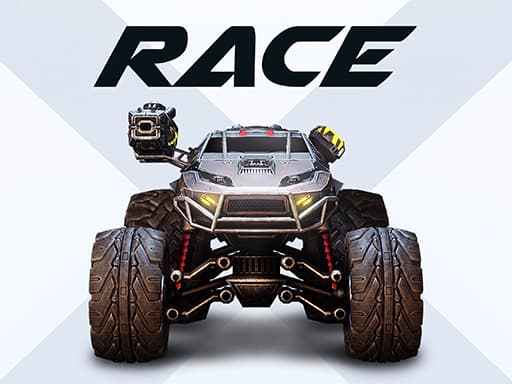
Arena and demolition. Contact is the point rather than a mistake. RACE: Rocket Arena Car Extreme and RocketCar Cup put over-powered cars in an enclosed space and let the physics do the entertaining. For you if the racing line bores you and you would rather ruin someone else's.
Simulation and cruising. City Car Driver: Mega Real Sim is the odd one out: no score, no timer, just a city and a car. Genuinely relaxing, and completely pointless if you came for adrenaline. For you if you want to drive rather than win.
The one technique that improves all of them
Brake before the corner, not in it.
Almost every new player holds the accelerator, turns into the bend, and slides wide. Then they brake mid-corner, which shifts weight forward, unsettles the back of the car and makes it worse.
The order that works is: brake in a straight line, release, turn, then accelerate through the exit. In a browser game with simplified physics this is worth a second or two per corner immediately, and it is the difference between fighting a car and driving one.
The corollary for drift games is the opposite of instinct: to hold a slide you stop steering into it so hard. Counter-steer slightly the other way and feed in power. Sawing at the wheel spins you.
What separates a good browser car game from filler
Weight. A good car has mass — it takes a moment to start turning, leans through a corner, and settles afterwards. A bad one pivots around its centre like a cursor. You can feel this in three seconds, before you have gone anywhere.
A camera that leads. The view should look slightly into the turn rather than staring at the boot. Cameras welded behind the car make fast driving feel like guesswork, because you cannot see what you are steering towards.
Damage or consequence that means something. Either contact matters or it does not — both are fine designs. What is not fine is contact that stops you dead with no feedback, which is a collision box doing an impression of a game.
Honest sense of speed. Speed is communicated by what passes you: road markings, roadside objects, motion at the edges of the screen. Games that convey speed only through a number on a dial feel slow no matter what the number says.
On the ones you are probably searching for
Most people arriving at a browser car game are looking for a specific title they played elsewhere. It is worth being straightforward: the big driving names are commercial products and no legitimate free portal carries them, whatever a site's page title claims. What genuinely exists is the mechanic — the stunt track, the traffic weave, the arena.
If you came here after something specific, the useful move is to work out which of the four kinds above it belonged to and start there. That gets you something you will actually enjoy far faster than searching the name and clicking through sites that do not have it either.